Walk into any commercial kitchen in Dubai during peak service and you’ll see exactly why exhaust systems matter so much: open flames, sizzling grills, deep fryers running non-stop, and a canopy hood pulling smoke, steam, and grease-laden vapor up and out of the kitchen every second the equipment runs. That hood and the ductwork behind it are doing one of the most important safety jobs in the entire restaurant — and it’s also one of the most neglected.
Kitchen hood and exhaust cleaning Dubai restaurants rely on is not a cosmetic add-on to your cleaning schedule. It is a fire-safety requirement, a Dubai Civil Defence compliance issue, an insurance condition, and a direct factor in the air quality your kitchen staff breathe all day. Yet it remains one of the most commonly deferred maintenance tasks in the UAE’s F&B industry — usually because grease buildup is hidden inside ductwork that nobody sees until something goes wrong.
This guide covers the 7 essential reasons regular kitchen hood and exhaust cleaning Dubai restaurants need matters so much, what the regulations require, how often cleaning should happen, and what a professional service actually involves.
Every time food is grilled, fried, or flame-cooked, airborne grease particles travel up through the hood, across the plenum, and into the ductwork on their way to the exhaust fan. Some of that grease escapes the filters and settles as a sticky film on the interior surfaces of the duct. Left alone, this film thickens layer by layer, service after service — which is exactly why kitchen hood and exhaust cleaning Dubai operators schedule regularly makes such a measurable difference.
That grease residue is highly combustible. A single spark, an overheated fan motor, or flare-up from the cooking line can ignite the buildup, and because it lines the entire duct run, a fire can travel from the cookline straight up through the roof in minutes. Grease-fueled duct fires are consistently cited by fire authorities as one of the leading causes of commercial kitchen fires worldwide, which is exactly why standards bodies treat exhaust cleaning as a fire-prevention measure rather than a housekeeping task.
The risk is amplified in Dubai’s climate. High ambient temperatures and constant air-conditioning use mean kitchen extract systems often run harder and longer than in cooler markets, which means grease accumulates faster than many operators expect — even with a well-maintained kitchen. This is one of the clearest reasons kitchen hood and exhaust cleaning Dubai restaurants invest in pays for itself many times over.
Kitchen hood and exhaust cleaning Dubai regulations require sits inside a wider fire-safety framework rather than being a matter of personal preference. Restaurants, hotel kitchens, cloud kitchens, and catering facilities operating in Dubai are required to maintain their kitchen extract and fire-suppression systems in line with Dubai Civil Defence regulations, and the internationally recognised NFPA 96 standard — the Standard for Ventilation Control and Fire Protection of Commercial Cooking Operations — is widely used as the technical benchmark for how that maintenance should be carried out.
In practice, this means:
For restaurant owners and facility managers, the takeaway is simple: kitchen hood and exhaust cleaning Dubai fire codes require isn’t just about keeping the kitchen looking clean — it’s a legal and insurance obligation tied directly to your ability to keep operating.
Fire risk gets most of the attention, but a neglected exhaust system creates problems long before it becomes a fire hazard.
Odor and smoke control. A clogged hood and duct system loses suction efficiency, which means smoke and cooking odors linger in the kitchen and can drift into the dining room — a fast way to lose repeat customers in a competitive Dubai dining market.
Pest attraction. Grease residue inside ducts and around rooftop exhaust fans is a food source for pests. A poorly maintained exhaust system can quietly undermine even the most disciplined kitchen hygiene program, which is one reason exhaust cleaning is often paired with routine pest control services as part of an integrated hygiene plan.
Indoor air quality. Kitchen staff spend eight-plus hours a day working directly under the hood. Reduced extraction efficiency means more airborne grease particles and heat stay in the kitchen environment, affecting staff comfort and long-term air quality.
Equipment lifespan. Grease-laden exhaust fans work harder and wear out faster. Motors overheat, bearings fail sooner, and rooftop units corrode more quickly when coated in a continuous layer of grease and grime.
HVAC efficiency. Kitchens don’t operate in isolation — a poorly performing exhaust system forces the surrounding air-conditioning to work harder to manage residual heat and odor. Restaurants that keep both their exhaust hoods and their AC duct systems on a regular cleaning cycle typically see more consistent indoor comfort and lower energy costs across the whole unit.
Cleaning frequency isn’t one-size-fits-all — it depends on cooking volume, cooking method, and fuel type. As a general guide used across the UAE hospitality sector for kitchen hood and exhaust cleaning Dubai kitchens should follow:
Whatever your baseline schedule, filters and visible grease traps should be checked far more frequently — ideally daily or weekly by kitchen staff — while the full duct-to-fan clean is carried out by certified technicians. If your kitchen is running a solid-fuel grill, char-broiler, or wok line, plan for the higher end of that frequency regardless of overall covers served, since these cooking methods produce grease at a much faster rate.
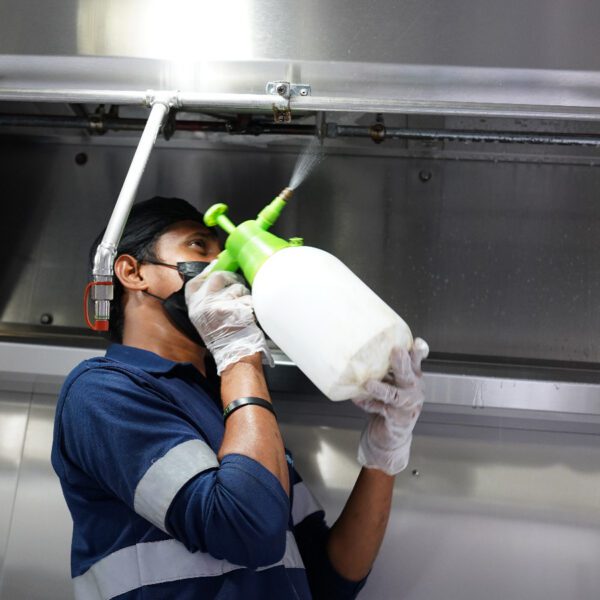
A genuine, compliance-grade clean goes well beyond wiping down the visible hood canopy. It should include:
Any provider that only cleans the hood and filters and skips the ductwork and fan isn’t delivering a compliant service — grease left further up the system is still a live fire hazard, and it’s usually the section that inspectors and insurers care about most.
Grease doesn’t just travel upward through the hood — it also flows downward through the drainage system every time equipment and floors are washed down. A kitchen that’s diligent about hood cleaning but neglects its grease trap is only managing half the problem. Untreated grease trap buildup leads to drain blockages, foul odors, and its own set of Dubai Municipality compliance issues. Because both systems generate and handle the same source of contamination, most Dubai restaurants find it far more efficient to schedule hood, duct, and grease trap cleaning together under a single maintenance contract rather than coordinating separate vendors.
Not every cleaning company is equipped to service commercial kitchen exhaust systems to the standard fire authorities and insurers expect. When evaluating a kitchen hood and exhaust cleaning Dubai provider, look for:
At Blue Diamond Group, we’ve been delivering facilities management services across the UAE since 1995, and our kitchen hood and exhaust cleaning Dubai service is built specifically around the realities of Dubai’s F&B sector — high-volume kitchens, tight compliance timelines, and zero tolerance for downtime during service hours.
Our teams handle the full scope: hood canopy and filters, plenum, complete ductwork, exhaust fans, and rooftop termination points, backed by documented before-and-after reporting your management team can use for internal records or Dubai Civil Defence inspections. As an ISO 9001, 14001, 41001 and 45001 certified facilities management company, we bring the same quality and safety standards to kitchen exhaust cleaning that we apply across our entire cleaning services portfolio — including grease trap cleaning, AC duct cleaning, and specialized deep cleaning for hospitality environments.
Because kitchen fire risk rarely comes from one system alone, we typically work with restaurant operators to build a combined maintenance schedule covering hood and duct cleaning, grease trap servicing, and fire suppression checks — so nothing falls through the gaps between vendors, and nothing gets missed between inspections.
How often does Dubai Civil Defence require kitchen hood and exhaust cleaning? Frequency depends on your kitchen’s cooking volume and fuel type, but most full-service restaurant kitchens in Dubai should schedule a full hood-to-fan clean every one to three months, with more frequent filter checks in between.
What happens if a restaurant fails a fire safety inspection over exhaust cleanliness? Outcomes range from a formal warning and a re-inspection deadline to fines, and in serious cases, a temporary closure until the exhaust system is professionally cleaned and re-certified.
Does kitchen hood cleaning affect insurance claims? Yes. Many commercial property and fire insurance policies reference NFPA 96 or local fire code compliance as a condition of coverage. Without documented, regular exhaust cleaning, a claim following a kitchen fire can be delayed, reduced, or denied.
Can restaurant staff clean the exhaust system themselves? Staff can and should clean the exterior of the hood and wash removable filters regularly. However, the ductwork, plenum, and exhaust fan require certified technicians with the right access equipment and degreasing methods to meet compliance standards.
Grease-related kitchen fires are almost entirely preventable with a consistent maintenance schedule. If it’s been more than a few months since your exhaust system had a full professional clean, now is the time to book one — before it becomes a compliance issue, an insurance problem, or worse.
Contact Blue Diamond Group today to schedule a kitchen hood and exhaust cleaning assessment for your Dubai restaurant, or explore our full range of commercial cleaning services built for the UAE hospitality sector.
Get in touch with us